


Faculty Members
Dr. Nabil Hassan Litayem
is an Assistant Professor in the Cyber Defence Department and Head of the Quality Assurance Department at Joaan Bin Jassim Academy for Defence Studies. He holds a PhD in Industrial Computing (2014) and a Master of Engineering in Embedded Systems from INSAT, University of Carthage, as well as a Master of Science in Electronics and a National Engineering Diploma in Electrical Engineering from ENIS, University of Sfax, Tunisia. Before joining the Academy in 2022, he taught at Qatar University and Salman Bin Abdulaziz University, and worked as a development engineer at Sagem (Safran). He serves as an international expert with several accreditation agencies, including CTI, Hcéres, FIBAA and AAQ. His research interests include IoT and embedded systems security, SCADA and critical infrastructure protection, network and cloud security, digital forensics, and artificial intelligence applications.
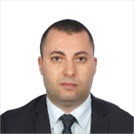
Dr. Hani Albasoos
is an Associate Professor of International Relations and Security Studies at the Joaan Bin Jasim Academy for Defense Studies, which he joined in 2020. He currently serves as Head of the Department of Developing Academic Programs and as Expert for the M.A. in Defense Diplomacy, having previously held the position of Associate Dean for Academic Programs. He earned his PhD in International Relations and Security Studies from the University of Bradford, UK (2005). Over two decades, he also has held academic appointments at Sultan Qaboos University in Oman and the Islamic University of Gaza, alongside advisory and research roles addressing conflict resolution, governance, and security sector reform, including service with the United Nations. A prominent political and security analyst, he has conducted over 5,000 media interviews. His research interests encompass defence diplomacy, security studies, mediation, and Middle East politics. He has supervised numerous MA and PhD theses.
Dr. Mustafa Al Samara
has been an Assistant Professor in the Cyber Defence Department at Joaan Bin Jassim Academy for Defence Studies, Qatar, since 2025. He holds a PhD in Information Technology (2023) from the University of Haute-Alsace, in collaboration with the University of Strasbourg, France, with a thesis on anomaly detection in the Internet of Things. He also holds a Master's degree in Methods of Informatics Applied to Business Management (MIAGE, 2014) from the University of Paris 1 Panthéon-Sorbonne, and a Master's degree (2011), with research on VoIP security, and a Bachelor's degree (2006) in Information Technology Engineering from Damascus University, Syria. He was affiliated with the University of Haute-Alsace from 2020 to 2025: as a doctoral researcher, as a lecturer in data analytics at its University Institute of Technology (2021–2023), and as a postdoctoral researcher (2024–2025) on the AURA.ai project. AURA.ai is a cross-border initiative bringing together universities and industrial partners from France, Germany and Switzerland to develop seamless, secure authentication for public transport users in the Upper Rhine region. There he led research on continuous authentication based on behavioural biometrics, applying machine learning and federated learning to protect user data privacy. He was also an Assistant Professor at the University of Strasbourg (2023–2024), a research engineer at the University of Bremen, Germany (2015–2016), working on fault detection in wireless sensor networks, a lecturer at the Arab International University in Syria (2010–2013), and a systems and network administrator at the Commercial Bank of Syria (2007–2010). His research focuses on artificial intelligence for cyber defence, including machine-learning-based anomaly and intrusion detection, the security of federated learning and malicious model detection, continuous authentication, and the security of IoT, wireless sensor networks and connected vehicles. He has authored more than 30 articles in peer-reviewed international journals and conferences.
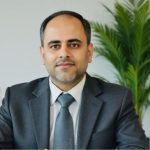
Prof. Dr. Mustapha Adib-Abdul-Wahed
is Professor of Defence and Security Studies at the Joaan Bin Jassim Academy for Defence Studies in Doha, Qatar. There, he also serves as Associate Dean for Graduate Programs, Head of the PhD Program in Defence and Security Studies, and Advisor to the President of the Academy. He has been a professor at the Lebanese University since 2000, and a full professor since 2011, teaching constitutional law, public international law, international relations and political science. He was also a Visiting Professor of Geopolitics at the University of Poitiers. He taught geostrategy at the Lebanese Army Staff College. His academic career is matched by long experience in government and diplomacy. He served as Ambassador of Lebanon to Germany from 2013 to 2025 and was Dean of the Arab Diplomatic Corps in Berlin. He was also Lebanon's Permanent Representative to UNESCO and to the Organisation Internationale de la Francophonie. In 2020, he was designated Prime Minister of Lebanon. He specializes in security sector governance and defence policy. He has collaborated with the Geneva Centre for the Democratic Control of Armed Forces (DCAF), and with Université Paris 1 Panthéon-Sorbonne (GRALE), he contributed to the World Report on Decentralization and Local Democracy (2008) as a member of its scientific committee and author of its regional chapter on Western Asia and the Middle East. He also led the Center for Middle-Eastern Strategic Studies (CESMO) and founded the Lebanese International Law Association. He holds a PhD in Political Science with highest honours from Université Montpellier I in France. He is a Commander of the National Order of the Cedar and an Officer of the Order of the Star of Italy.

Dr. Malath Alagha
holds a PhD in International Relations from the University of Exeter in the United Kingdom. He currently serves as an Associate Professor in the Defense Diplomacy Program at Joaan bin Jassim Academy for Defense Studies. He has published numerous research papers in the field of international relations. Dr. Alagha’s research interests lie at the intersection of diplomacy, economics, politics, and security. His work explores how these interconnected domains shape international relations, with particular emphasis on the strategic use of diplomatic and economic instruments to advance national and regional objectives in both regional and international contexts
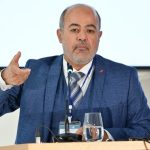
Dr. Ghazi Ibrahim Al-Assaf
is Associate Dean for Scientific Research and Associate Professor of Defence Economics at Joaan Bin Jassim Academy for Defence Studies, State of Qatar. He holds a PhD in Economics from Swansea University (University of Wales), United Kingdom, and has more than 15 years of academic, research, and consulting experience. He previously served as a member of the Directing Staff at the Royal Jordanian National Defence College (2016–2021). From 2011, he was Associate Professor of Economics at the University of Jordan, where he served as Head of the Department of Business Economics and as Assistant Dean for Student Affairs.
Dr. Al-Assaf is an economist specializing in macroeconomic policy in developing countries, defence economics, and applied econometrics. He has served as an economic consultant on high-level international projects with leading institutions, including the World Bank, the EU, the UNDP, the (ESCWA), and the Economic Research Forum (ERF). He has published more than 30 peer-reviewed studies in prestigious international journals and conference proceedings. He also serves on the editorial boards of academic journals and on specialized academic and professional committees and councils at the regional and international levels.
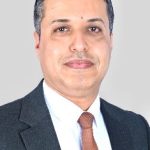
Dr. ElMouatez Karbab
is an Assistant Professor at the Joaan Bin Jassim Academy for Defence Studies in Qatar. He holds a PhD in cybersecurity and artificial intelligence from Concordia University in Montreal (2020). He was previously a researcher at Concordia University and a Research Scientist at the National Cyber-Forensics and Training Alliance (NCFTA) in Canada, which investigates cybercrime. He was a core member of the CANARIE IDS project, which built a national Security Operations Platform for Canadian universities, and has worked with Canadian agencies including the RCMP and the CRTC on cybersecurity and digital forensics. He designs and teaches courses in Agentic AI, AI and Cybersecurity, and Cybercrime Investigations. He has written books and peer-reviewed papers on cyber threat intelligence, applied machine learning, and embedded systems.
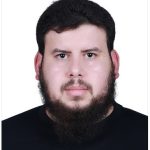
Dr. Mohamed Hassan Sayed Mohamed Salih
is an Associate Professor in the Department of Cyber Defence at the Joaan Bin Jassim Academy for Defence Studies, Qatar, where he has served since 2021. He earned his PhD in Information Technology in 2013. His research interests include information security, cybersecurity, and digital forensics, with a focus on emerging technologies and their applications in security and cyber defence. Dr. Salih has extensive academic and administrative experience. He served as Head of the Information Technology Department for thirteen years from 2001 and was Dean of the College of Computer Studies at The National Ribat University, Sudan, from 2013 to 2020. He has supervised postgraduate students and authored or co-authored more than 15 published research papers. He is also a Certified Reviewer accredited by Qatar’s National Committee for Qualifications and Academic Accreditation (NCQAA), valid from 6 October 2025 to 6 October 2028.
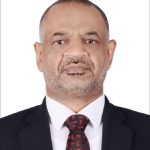
Dr. Feras Ali Qawasmeh
is an Assistant Professor of Public Policy at Joaan Bin Jassim Academy for Defence Studies, which he joined in 2023. He received his PhD from the University of Malaya in 2022. Prior to joining the Academy, he was a Postdoctoral Research Fellow in Public Policy at the Doha Institute for Graduate Studies. Earlier in his career, he worked as a researcher at the Vision Center for Political Development. He has published a number of peer-reviewed academic articles in both English and Arabic and has authored several policy papers and reports for government institutions and civil society organizations. In 2023, he received the Best Paper Award in the field of regional development and policy from the Regional Studies Association in the United Kingdom. His research interests lie at the intersection of governance, public policy, and security, with a particular focus on energy, water, and environmental issues. He has also supervised a number of master’s theses
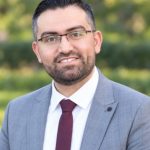
Dr. Nassima Ouhab Alathamneh
Assistant Professor of Defense and Energy Economics. Ph.D. in Political Economy from Paris Descartes University, France (2016–2018). Lecturer and Tutorial Instructor at Paris Nanterre University (Paris 10, France) from 2018 to 2021, specializing in statistics, financial markets, corporate economics, and international economics. Author of Beyond Oil in the Arab and Islamic World: Political and Economic Transformations, L’Harmattan Editions, Paris, 2018. Author of several articles on energy and economic development in the Arab region, the energy transition, political and economic transformations in the Middle East and North Africa, financial inclusion, and crisis management.

دكتور رشيد أعراب
is assistant Professor of International Relations and Foreign Policy at the Joaan Bin Jassim Academy for Defence Studies; Research Fellow at the IntraAsia Research Group at the Autonomous University of Barcelona. He holds a PhD in Political Science, Public Policy and International Relations; a Master's degree in International Relations, Security and Development; and a Master's degree in Philosophy: Humanity, Ethics and Politics. He previously worked at the Autonomous University of Barcelona and the Open University of Catalonia. He has also been a visiting researcher at Princeton University; London School of Economics and Political Science; Centre for Gulf Studies; and Qatar University. His research and areas of interest focus on the security and defence policies of small states, diplomacy and foreign policy, the geopolitics of energy, social movements, theory of International Relations, and Mediterranean and MiddleEast region. He has published over 20 peer-reviewed works in the form of academic articles in journals and chapters in edited volumes in English, Spanish, French and Arabic.
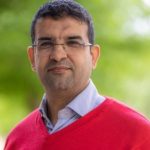
Prof. Fathelalem Ali Hija
Assistant Dean for Student Affairs and Professor of Artificial Intelligence and Cybersecurity – Joaan Bin Jassim Academy for Defence Studies, Qatar. Prof. Hija holds a Doctor of Engineering in Information Engineering, specializing in Complex Intelligent Systems, and a Master of Engineering from the University of the Ryukyus, Japan, and a B.Sc. in Engineering from the University of Khartoum. He has nearly three decades of higher education experience, including over two decades at Meio University, Japan, where he served as Professor of Information Systems and Computer Science and chaired the Department of Management and Computer Science in the Graduate School. He contributed to graduate program development and led an international Network Engineering and Security training program in cooperation with JICA for six years. He remains affiliated with Meio University as a Joint Researcher. His international collaborations span institutions in the United States, Malaysia, Sudan, and Japan. His research focuses on AI, cybersecurity, cyber defense, information warfare, strategic and national AI governance, and AI applications in decision-making, defense, and national security. He is an IEEE Member.
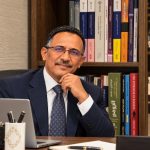
Dr Ibrahim Natil
is the chair of MA postgraduate programmes and Assoc professor of International Relations and Diplomacy, Joaan Bin Jasim Academy for Defence Studies. Dr Natil awarded PhD from Coventry University UK (2011); studied diplomacy, UK (2001/2002), management, Hungary (2010), business, Ireland (2014) and international studies and conflict transformation Switzerland (1999). Dr Natil has published 10 books and 62 articles and chapters in the field of international relations, development and politics and taught at academic institutions in Ireland and UK. Dr Natil also worked for a number of international organisations, managed more than 62 grants in the field of human rights, development, and peacebuilding since 1997. Dr Natil served as a visiting professor/lecturer and acted as an external examiner to a number of UK universities as Glasgow Caledonian (2021/2025), Durham University (2020) and Bradford University (2018-2021).
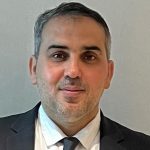
Dr. Abdelhak Belhi
أis an Assistant Professor at Joaan Bin Jassim Academy for Defence Studies in Qatar and serves as Program Expert for the Master of Science in Cyber Defence and the Doctor of Philosophy in Security and Defence Studies. He holds a PhD in Computer Science from the University of Lyon, France, and a master’s degree in Software Engineering and Information Processing from the University of Boumerdes, Algeria. His academic career includes research appointments at Qatar University, where he also served as an Adjunct Assistant Research Professor at the KINDI Center for Computing Research. His current research focuses on using artificial intelligence and deep learning to detect cyber threats, protect industrial systems and Internet of Things (IoT) networks, and improve the robustness of AI models against adversarial attacks. He has led funded research projects and published in peer-reviewed journals and international conference proceedings. He also supervises master’s research, co-supervises doctoral students, contributes to academic program development, and serves as a reviewer for several scientific journals.
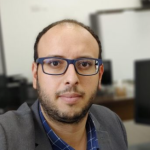
Dr. Mohammed Cherkaoui
is scholar and practitioner of global conflict resolution. He is Professor of Conflict Resolution and Diplomacy at Joaan Bin Jassim Academy for Defence Studies. He has taught at George Mason University’s Carter School for Peace and Conflict Resolution in Washington and served on the United Nations Panel of Experts at the Department of Political Affairs in New York. He has lectured at the United Nations, the French Senate in Paris, the Council of Europe in Strasbourg, University of Erlangen-Nürnberg in Germany, George Washington University and Johns Hopkins University, Carleton University in Canada, and other European and Arab universities and think tanks.
His recent published papers and books include “A New Global Covenant? Great Power Conflicts and Conflict Resolution in the post-Corona Era”, “The Legitimacy Puzzle in the UN Mediation of the Libyan Conflict”, “Small States’ Pursuit of Impact at the UN Security Council: The Case of Tunisia 2020-2021”, “What is Enlightenment? Continuity or Rupture in the Wake of the Arab Uprisings”; and “Civilians and Modern War: Armed Conflict and the Ideology of War”. Among his published studies in French is "The Quest for Gendered Modernity in Arab Societies." His current research focuses on the concept of Conflictology and discourse strategy, as well as ways to employ conflict resolution within media discourse—using it as a novel mechanism to transform narratives, perceptions, relationships, and identities in the public sphere. He also examines shifting power dynamics and the fragmentation of human groups, while defining the Arab contribution to conflict resolution—a field of theory and practice that originated in the West. He is currently working on two books: “The Ordeal of Individualism: A Critique of Arab Structuralism” and “Conflictology: Theoretical Foundations and Pragmatic Practices.”
 English
 Arabic